
Thermal Imaging Inspections: What They Can and Cannot Show
Understand infrared inspection limits, preparation and reports before using thermal images to plan insulation work.
A thermal camera measures surfaces
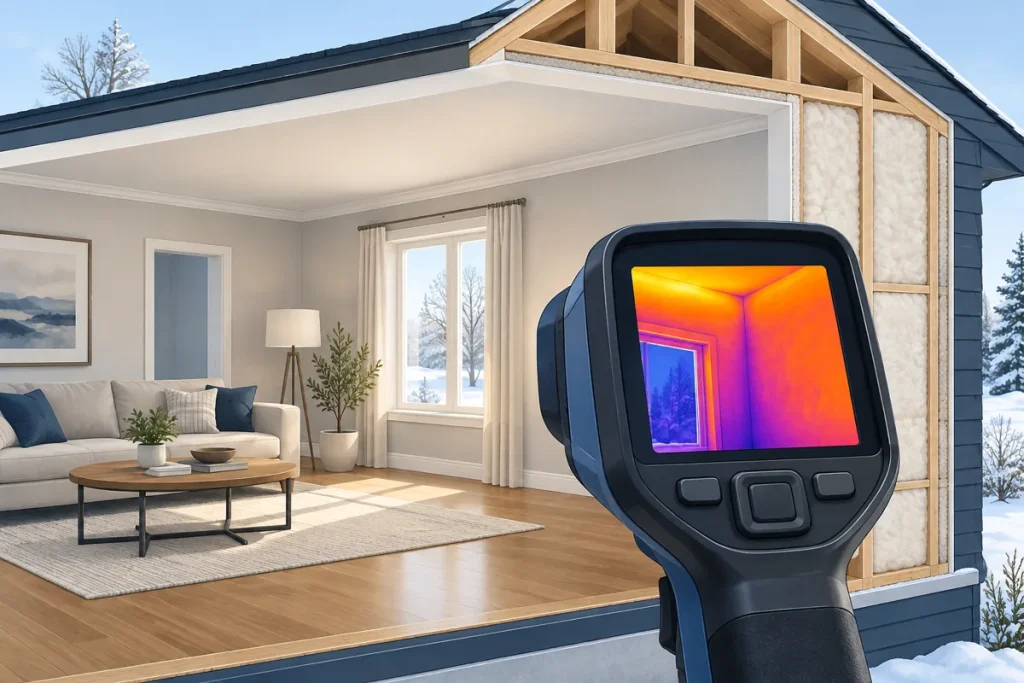
A thermal image represents temperature differences on the surfaces the camera can observe. It is not a photograph of the insulation hidden inside a wall. Colors are a display choice, so red or blue does not automatically mean a building defect.
Ask the assessor to explain the image alongside the room conditions and ordinary photographs.
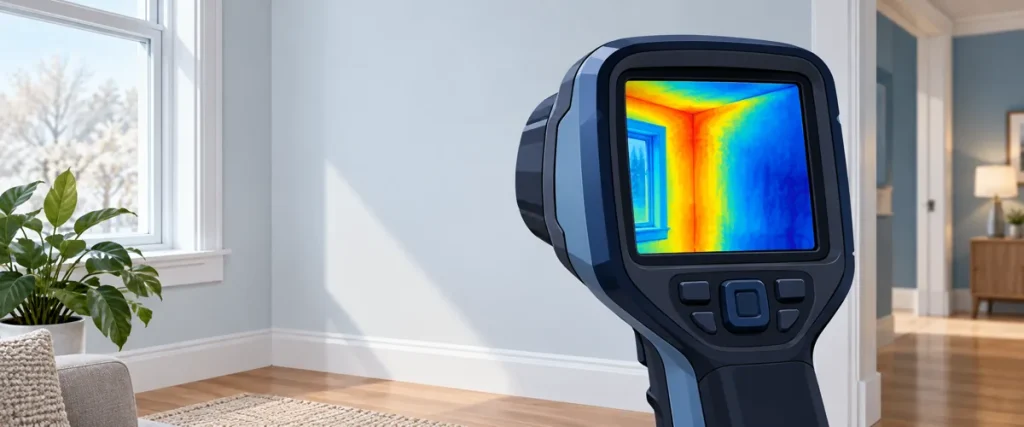
What the inspection can help investigate
Temperature patterns may help an assessor investigate suspected heat-loss areas or air leakage. The Department of Energy describes thermal scans and blower door testing as tools used in professional energy assessments, sometimes together.
A useful inspection begins with a question, such as why one corner feels colder, rather than a promise to diagnose every hidden issue from one scan.
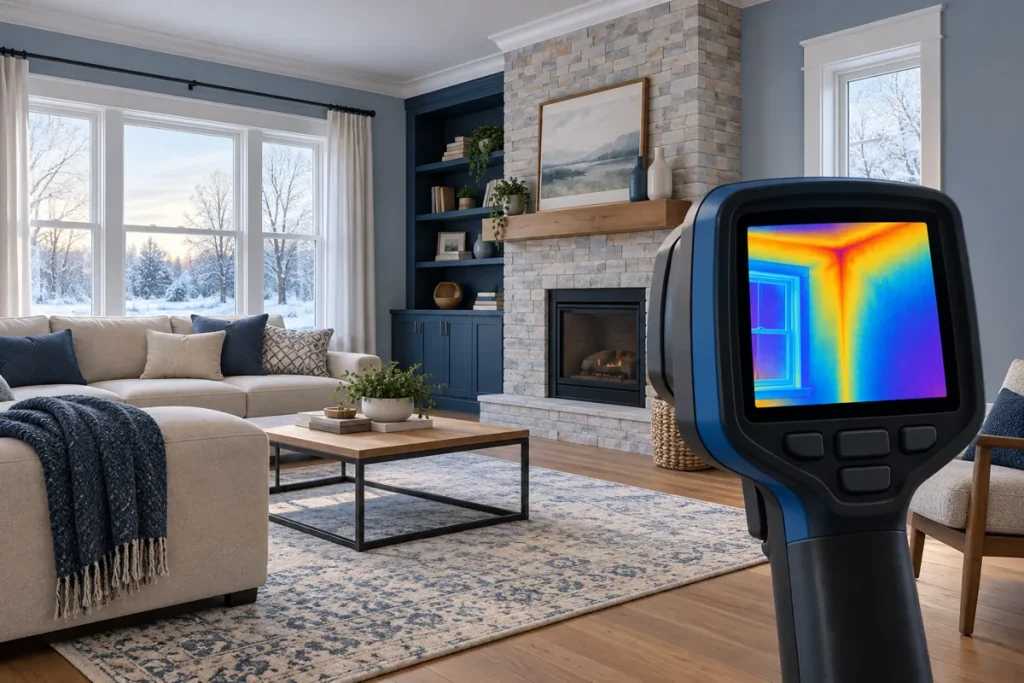
What it cannot establish by itself
A scan does not reliably identify an exact hidden product, measure its installed thickness or prove the source of moisture without other evidence. A pattern can have more than one explanation.
Request a distinction between a confirmed observation, a likely interpretation and an item needing further testing. Avoid treating an image as a guaranteed installation plan.
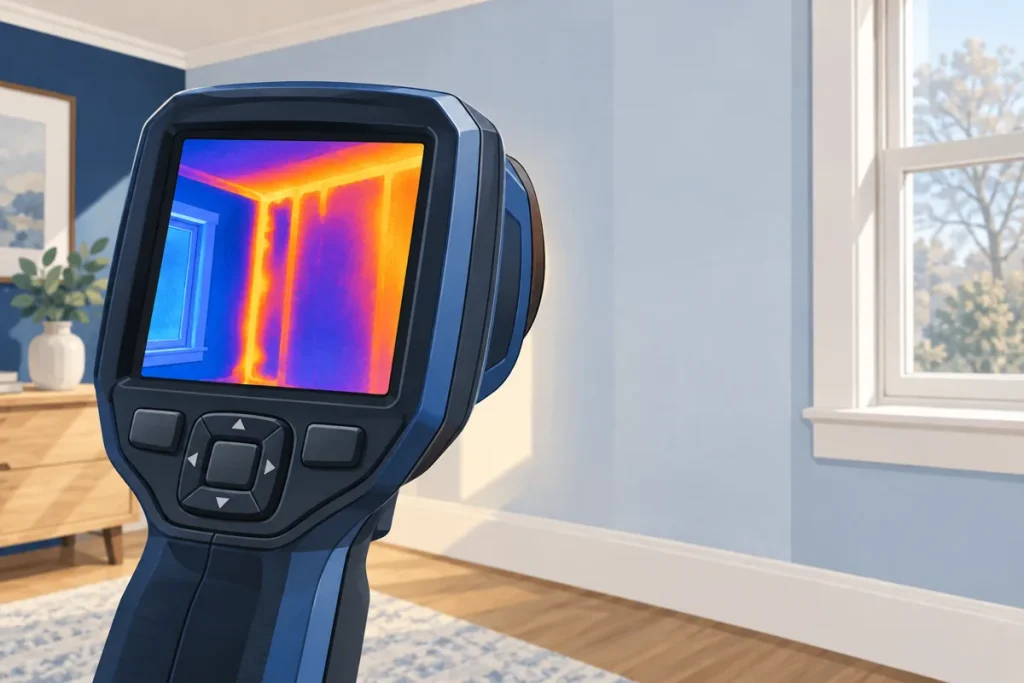
Prepare for the appointment
Ask the provider what indoor and outdoor conditions they require and whether furniture needs to be moved. Explain your heating schedule and recent work. Follow their preparation instructions rather than changing temperatures based on a generic rule.
Make accessible areas available and tell the assessor which spaces cannot be entered. An inaccessible area should be noted in the report, not silently assumed to be satisfactory.
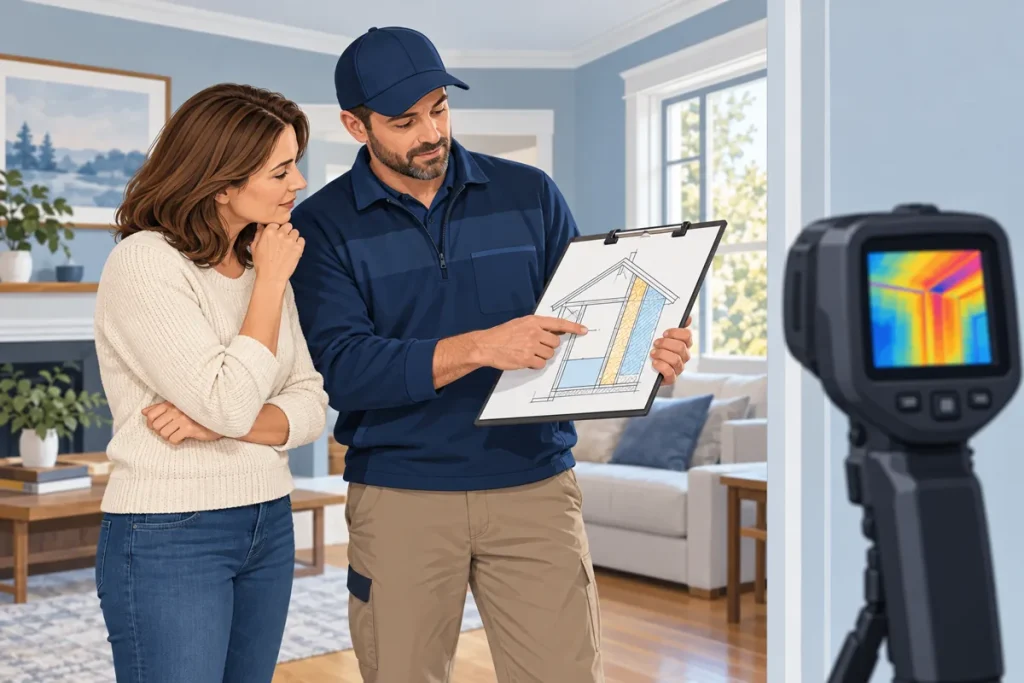
Know what you are buying
Before booking, ask whether the price includes a written report, ordinary photographs, thermal images, an air-leakage test and recommendations. Confirm whether the inspection is independent or part of a sales estimate.
Request a clear report
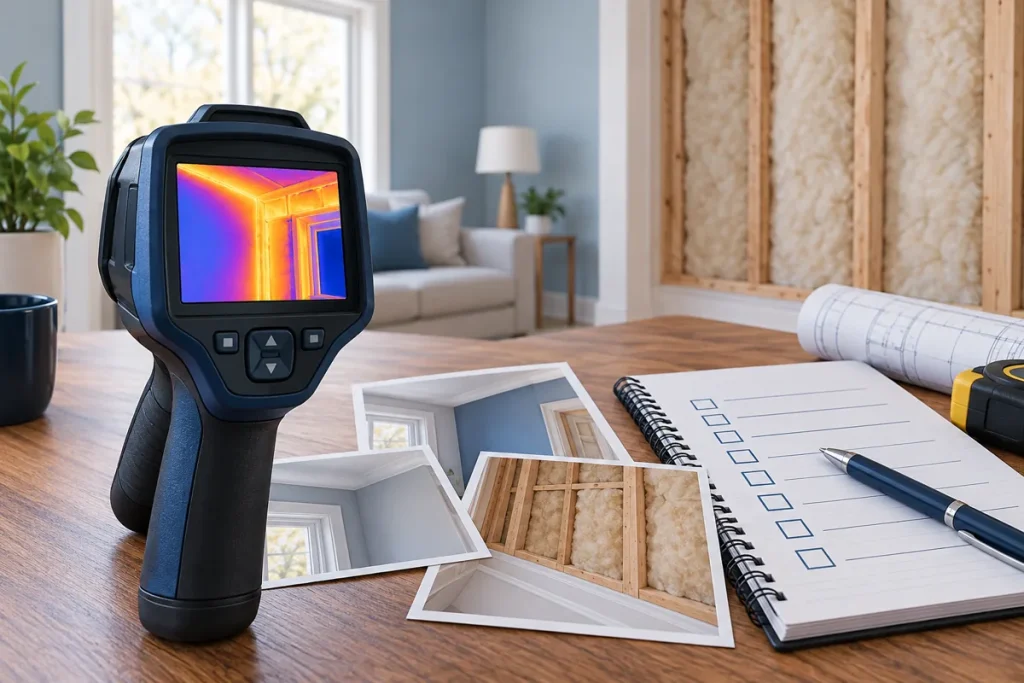
Useful deliverables identify inspected rooms, relevant conditions, observations, limitations and suggested next steps. Ask how findings relate to your original comfort complaint.
Turn findings into a defined scope
Share the report with bidders and ask them to reference the areas they propose to treat. If a bidder recommends a different solution, ask for the reason and supporting observations.
The next step might be an insulation scope, an access investigation or another trade evaluation. Thermal imaging is one input to that decision, not a substitute for it.
Icynene open-cell insulation
Explore Icynene spray foam materials for interior insulation applications.
Explore Icynene ↗
Explore the Xtreme Spray Gun
See PMC spray foam gun information and connect with its distributor network.
Explore PMC spray guns ↗